Aug 16 2025
Buna VS. Viton Seals: Which Seal is Right for Your Application?
Read More >

A single lip oil seal uses one primary sealing lip to retain lubricant, while a double lip oil seal adds a secondary lip to help prevent dust, moisture, and other contaminants from reaching the primary sealing area. A double lip design provides additional environmental protection, but it is not automatically the best option for every machine.
The correct choice depends on contamination exposure, shaft speed, lubrication, available space, friction, temperature, and the required service life. For clean, enclosed equipment, a single lip seal may provide reliable sealing with lower friction. For dusty, wet, or exposed environments, a double lip seal is usually more suitable.
The main difference between a single lip and double lip oil seal is the number and function of the sealing lips.
A single lip oil seal normally has one elastomeric sealing edge that contacts the rotating shaft. This primary lip retains oil or grease inside the housing and prevents leakage along the shaft. Many designs use a garter spring to maintain consistent radial force as the seal operates.
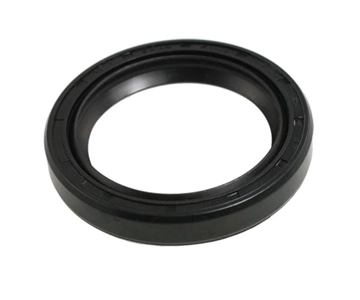
A double lip oil seal has a primary sealing lip and an additional secondary lip. The primary lip performs the main lubricant-retention function, while the secondary lip usually faces the air side and helps block dust, dirt, splash water, and other external contaminants.
In many applications, the second lip functions as a dust or exclusion lip rather than a second pressure-sealing lip. Therefore, the number of lips alone does not determine the pressure capacity of an oil seal. The complete seal profile, elastomer material, spring design, shaft condition, temperature, and operating speed must also be considered.
A typical double lip oil seal is suitable when the equipment requires both lubricant retention and additional protection against contamination.

When comparing oil seal single lip vs double lip designs, sealing efficiency should be evaluated according to the operating environment.
Single lip seals perform well in clean systems where the main requirement is to keep lubricant inside the housing. Because only one lip contacts the shaft, these seals generally produce less friction and heat. This can be beneficial in high-speed rotating applications, provided that contamination is adequately controlled.
Double lip seals offer better protection when the shaft is exposed to dirt, water, mud, metal particles, or other environmental contaminants. The auxiliary lip creates an additional barrier before contaminants can reach the primary sealing lip.
However, additional lip contact may increase friction and operating temperature. If the space between the two lips is not lubricated correctly, the secondary lip may run dry and wear prematurely. A double lip seal should therefore be selected based on actual environmental conditions rather than simply assuming that two lips always provide better performance.
For applications involving unusual pressure, speed, temperature, or chemical exposure, standard rotary oil seals should be evaluated against the equipment manufacturer’s operating requirements.
Single lip oil seals are commonly suitable for:
Enclosed motors and gearboxes operating in relatively clean conditions
Equipment where low friction is important
High-speed shafts with limited external contamination
Applications with restricted installation space
Systems where the primary requirement is lubricant retention
Double lip oil seals are generally more suitable for:
Agricultural and construction machinery exposed to dust and mud
Automotive components exposed to road debris and splash water
Industrial gearboxes operating in contaminated environments
Pumps, motors, and rotating equipment installed in open production areas
Applications requiring additional protection for the primary sealing lip
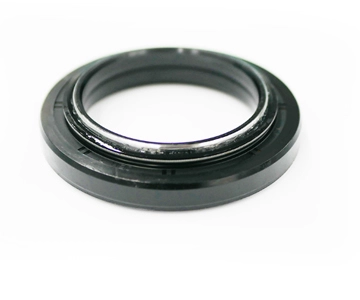
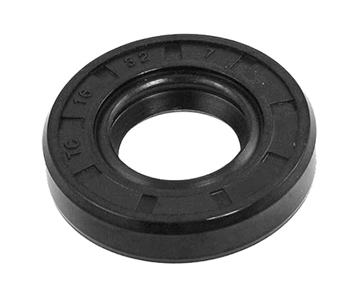
Some TC oil seals use a rubber-covered outer diameter, a spring-loaded primary lip, and an auxiliary dust lip. These designs are widely used where both lubricant retention and contaminant exclusion are required.
The operating medium must also be considered. NBR is commonly selected for general mineral-oil applications, while FKM may be more appropriate when higher temperatures or stronger chemical resistance are required. The final material choice should be based on the actual lubricant, temperature range, shaft speed, and surrounding environment.
Before choosing a seal, determine whether the equipment primarily needs lubricant retention or additional contaminant exclusion.
Choose a single lip oil seal when the shaft operates in a clean, enclosed environment and minimizing friction is important. A single lip design can provide an efficient and economical sealing solution when external dirt and moisture are not major concerns.
Choose a double lip oil seal when the equipment operates in dusty, wet, muddy, or otherwise contaminated conditions. The secondary lip helps protect the primary sealing edge and can reduce the risk of premature leakage caused by contaminant ingress.
The following factors should be confirmed before ordering:
Shaft diameter and housing bore
Shaft speed and direction of rotation
Operating temperature
Lubricant or fluid compatibility
Pressure conditions
Dust, moisture, and contamination exposure
Shaft surface condition and runout
Installation space and seal orientation
If standard dimensions or materials cannot meet the application requirements, custom rubber parts can be developed according to the equipment, sealing medium, operating environment, and dimensional specifications.
Correct installation is essential for both single lip and double lip seals. The shaft and housing should be clean and free from burrs, sharp edges, and surface damage before installation.
The primary sealing lip should normally face the lubricant that must be retained. For a double lip seal, the auxiliary lip usually faces the external environment. Installing the seal in the wrong direction may reduce lubricant retention or contaminant protection.
Apply a suitable lubricant to the sealing lip before installation to prevent dry running during startup. For double lip designs, the space between the primary and auxiliary lips may also require lubrication, depending on the application and seal design.
Use appropriate installation tools to apply even pressure to the seal. Avoid hammering directly on the seal or forcing it across sharp shaft edges. After installation, inspect the seal position, shaft alignment, and surrounding area for signs of distortion or damage.
During operation, leakage, unusual temperature, excessive wear, or contamination around the shaft may indicate incorrect installation, unsuitable material, shaft damage, or an improper seal design.
The difference between a single lip and double lip oil seal is mainly the secondary contaminant-exclusion lip. Single lip seals provide effective lubricant retention with lower friction in clean operating conditions. Double lip seals offer additional protection in dusty, wet, or exposed environments, although they may create more friction and require careful lubrication.
The best seal should be selected according to shaft speed, temperature, fluid compatibility, contamination exposure, installation conditions, and equipment requirements. Evaluating these factors together helps improve sealing reliability and reduce premature wear or leakage.