Apr 08 2024
Selecting the Right Hydraulic Rubber Gaskets: Tips for Optimal Performance
Read More >

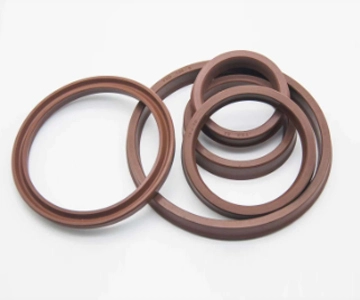
Flat round rubber seals are flat, circular sealing components designed to prevent liquids, gases, dust or contaminants from passing between two mating surfaces. Depending on their shape and application, they may also be called flat rubber gaskets, rubber washers, sealing rings or rubber discs.
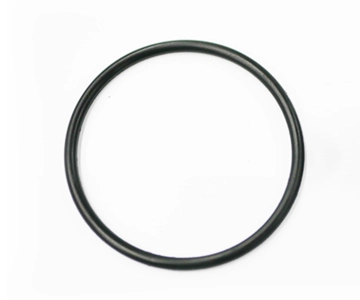
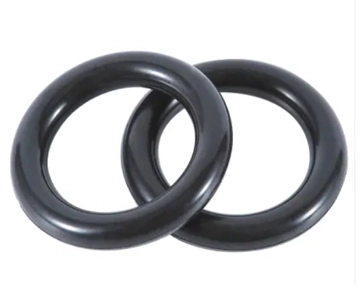
Unlike O-rings, which have a circular cross-section and are normally installed inside a specially designed groove, flat rubber seals have a consistent thickness and are compressed directly between two surfaces. They are primarily used for static sealing applications.
A flat rubber seal works by being compressed between two mating surfaces. Under compression, the rubber conforms to small surface irregularities and fills potential leakage paths.
Reliable sealing depends on more than the rubber material alone. The seal dimensions, thickness, hardness, compression level, surface condition and fastening force must all match the operating environment.
Insufficient compression may leave gaps between the sealing surfaces. Excessive compression can damage the rubber, cause permanent deformation or force the material out of the sealing area.
The correct material should be selected according to the fluid, temperature, pressure and external environment.
NBR is commonly selected for applications involving petroleum-based oils, grease and many industrial fluids. It provides a practical balance of oil resistance, mechanical strength and cost.
However, NBR is generally not the preferred choice for continuous outdoor exposure, ozone or strong weathering conditions.
EPDM offers good resistance to water, steam, ozone, sunlight and outdoor weathering. It is frequently used in water systems, outdoor equipment and general industrial sealing.
EPDM is normally unsuitable for petroleum oils, gasoline and hydrocarbon fuels.
Silicone remains flexible across a relatively broad temperature range and is available in a variety of hardness levels and colors. It is often chosen when temperature stability, flexibility or cleanliness is important.
Our flat silicone rubber gasket washers can be customized according to the required inner diameter, outer diameter and thickness.
Silicone generally has lower abrasion and tear resistance than some other industrial rubber materials, so the operating conditions must be evaluated carefully.
Neoprene provides balanced resistance to weathering, moderate oil exposure and general environmental conditions. A customized neoprene gasket can be used in equipment housings, industrial assemblies and other general sealing applications.
FKM is commonly considered for applications involving high temperatures, fuels, oils and aggressive chemicals. It usually costs more than general-purpose rubber materials but may provide better performance in demanding environments.
Because compatibility varies between specific chemicals and rubber compounds, the operating medium should always be confirmed before selecting FKM or any other material.
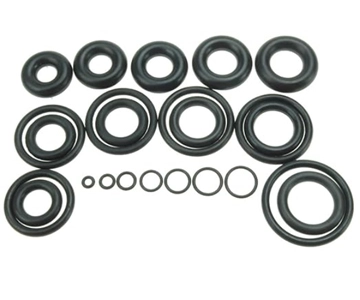
Flat rubber seals and O-rings are not automatically interchangeable.
A flat rubber seal has a rectangular cross-section and is commonly compressed between flat mating surfaces. An O-ring has a circular cross-section and is usually installed inside a machined groove.
Flat seals are commonly used for flanges, covers, housings and washers. O-rings are more suitable for purpose-designed glands and may be used in either static or dynamic sealing systems.
The correct choice depends on the assembly structure, available sealing space, pressure and required compression.
Flat round rubber seals are widely used in:
Pipe and flange connections
Pumps, valves and tanks
Equipment covers and access panels
Electrical and outdoor enclosures
Household appliances
Automotive and mechanical assemblies
Water treatment equipment
General industrial machinery
For pipe connection applications, the shape, dimensions and compound of a rubber coupling gasket should be matched to the pipe structure, medium and operating pressure.
Standard flat rubber seals are mainly intended for static applications. If the seal is exposed to continuous rotation, sliding movement or reciprocating motion, a seal specifically designed for dynamic service should be used.
Before selecting or ordering a seal, confirm the following information:
Identify every liquid, gas, lubricant or cleaning chemical that may contact the seal. Chemical incompatibility can cause swelling, softening, hardening, cracking or loss of sealing force.
Provide both the minimum and maximum operating temperatures, including temporary temperature peaks. Rubber performance can vary significantly between compounds of the same material family.
Higher pressure may require a different material hardness, seal thickness, flange design or additional mechanical support. Pressure capability cannot be determined from the rubber material alone.
Confirm the inner diameter, outer diameter and thickness. The allowable dimensional tolerance should also be specified when the seal must fit a precise assembly.
Softer rubber can conform more easily to surface irregularities, while harder rubber may provide better resistance to deformation and extrusion. The appropriate hardness depends on the assembly and compression requirements.
The mating surfaces should be clean, flat and free from sharp edges. Bolt quantity, tightening sequence and clamping force can affect compression uniformity and sealing performance.
For non-standard dimensions or operating conditions, custom rubber parts can be manufactured according to drawings, samples or detailed application requirements.
Before installation, clean the sealing surfaces and remove dirt, oil residue, old gasket material and sharp burrs. Check that the seal is free from cuts, cracks, permanent deformation or dimensional damage.
Position the seal evenly without stretching or twisting it. For bolted assemblies, tighten the fasteners gradually using an appropriate cross pattern to distribute the load uniformly.
Avoid excessive tightening. Over-compression may damage the seal or reduce its ability to accommodate movement and surface variation.
A used seal should not be installed again if it has developed a permanent compression set, surface damage or material deterioration.
Common sealing problems include:
Selecting a rubber material that is incompatible with the medium
Insufficient or excessive compression
Incorrect inner diameter, outer diameter or thickness
Uneven bolt tightening
Damaged or contaminated mating surfaces
Excessive operating pressure
Rubber aging caused by heat, ozone or chemical exposure
Using a static flat seal in a dynamic application
Understanding the actual failure mode is important before changing the material or seal dimensions.
Flat round rubber seals can be manufactured in different materials, hardness levels, colors and dimensions. Depending on the required quantity and tolerances, they may be molded or cut from rubber sheet.
To request a custom seal, provide the application medium, temperature range, pressure, inner diameter, outer diameter, thickness, hardness and expected order quantity. A drawing or physical sample can help confirm the structure and dimensional requirements.